A More Powerful Inquiry

One of my core educational values is Curiosity. Yet, in the past I have fallen into the trap of Inquiry = Research instead of a more open curious discovery process. One of the biggest pedagogical changes I have made was when I shifted to an inquiry approach that was about allowing students more time to dwell, think and discuss their questions on whatever the topic of study was at that time.

A lot of this had been intuitive practice so I was stoked when I first came across the Galileo Educational Network website and their intro to Inquiry (thanks Karen for the link!):

Intro to What is Inquiry from Galileo Education Network

Intro to What is Inquiry from Galileo Education Network

Prior to this I had usually thought of inquiry more as the information literacy type of inquiry where you are purposely following a series of steps in your investigation. Two of the best versions I had seen of this that had influenced my practice were: Continue reading
Designing and Causing Learning

Wednesday morning as a staff we focused on what the learning will look like at Hobsonville Point Secondary School.

I shared a blog post by Grant Wiggins entitled Beyond teacher egocentrism: design thinking which is absolutely brilliant and provokes teachers to think of themselves as just one element that influences learning. This had really struck a chord for me and so I was rapt to see the rest of our staff enjoying the reading as well.

There are lots of good points in this blog but one line that sticks out for me and was mentioned by others in our discussions was:

we are in the business of designing and causing learning instead of merely in the business of teaching

Our activity focused on what Grant sees as the conditions necessary for optimal engagement and active learning to occur. Staff were broken into pairs or 3s to think about what that condition will look like for our specific context of HPSS. Below are the conditions and what we believe they look like for us: Continue reading

Bringing Discovery Back

On Friday I was invited/gatecrashed a visit by our Deputy Principals to see the Mind Lab in Newmarket. It is an incredible space that really empowers people to discover science, technology and engineering. We are having a large MakerSpace built in our new school so were looking forward to seeing some ideas for how it could be set up and used plus work out what the Mind Lab could offer above what we could do in future.

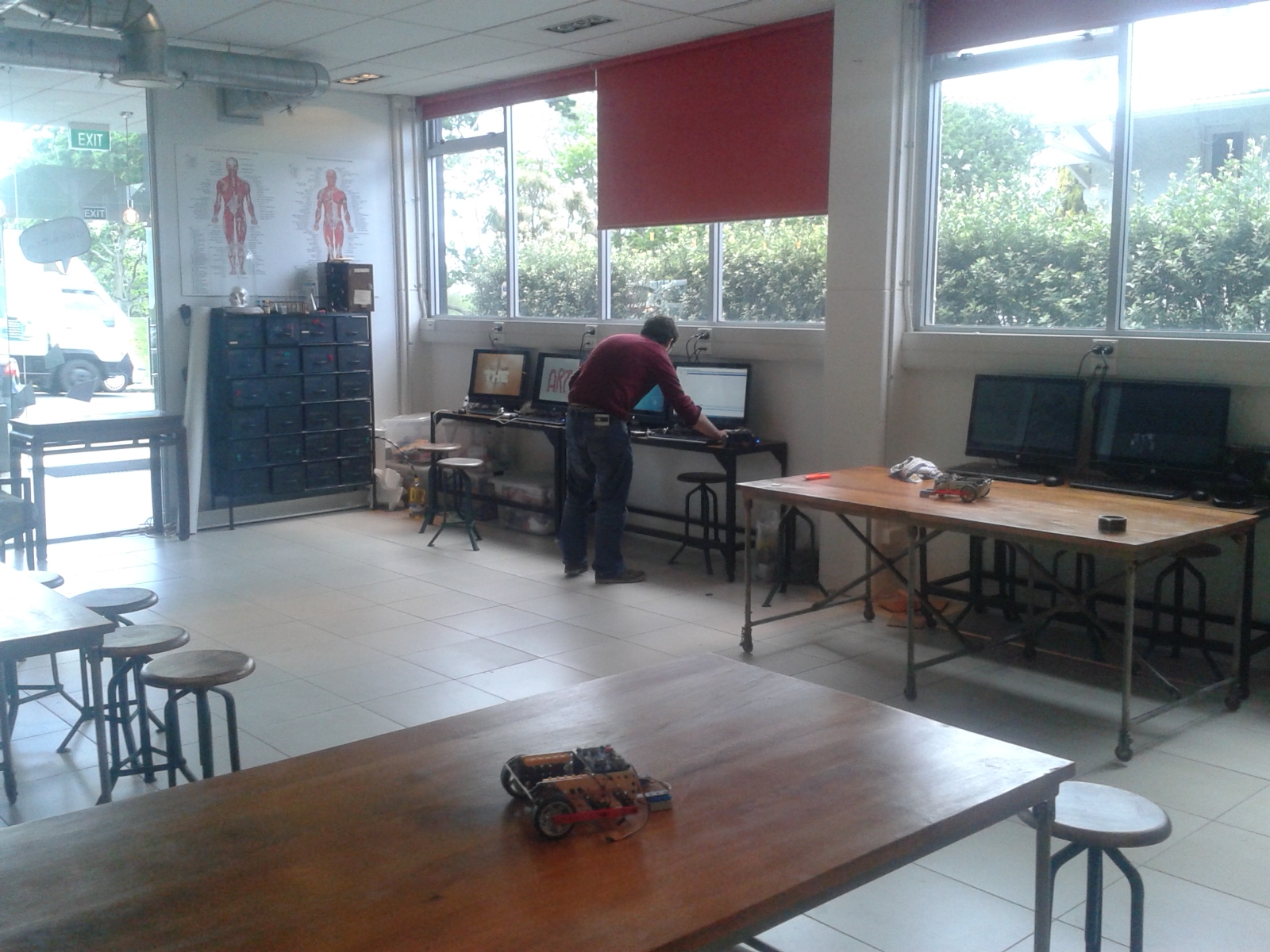
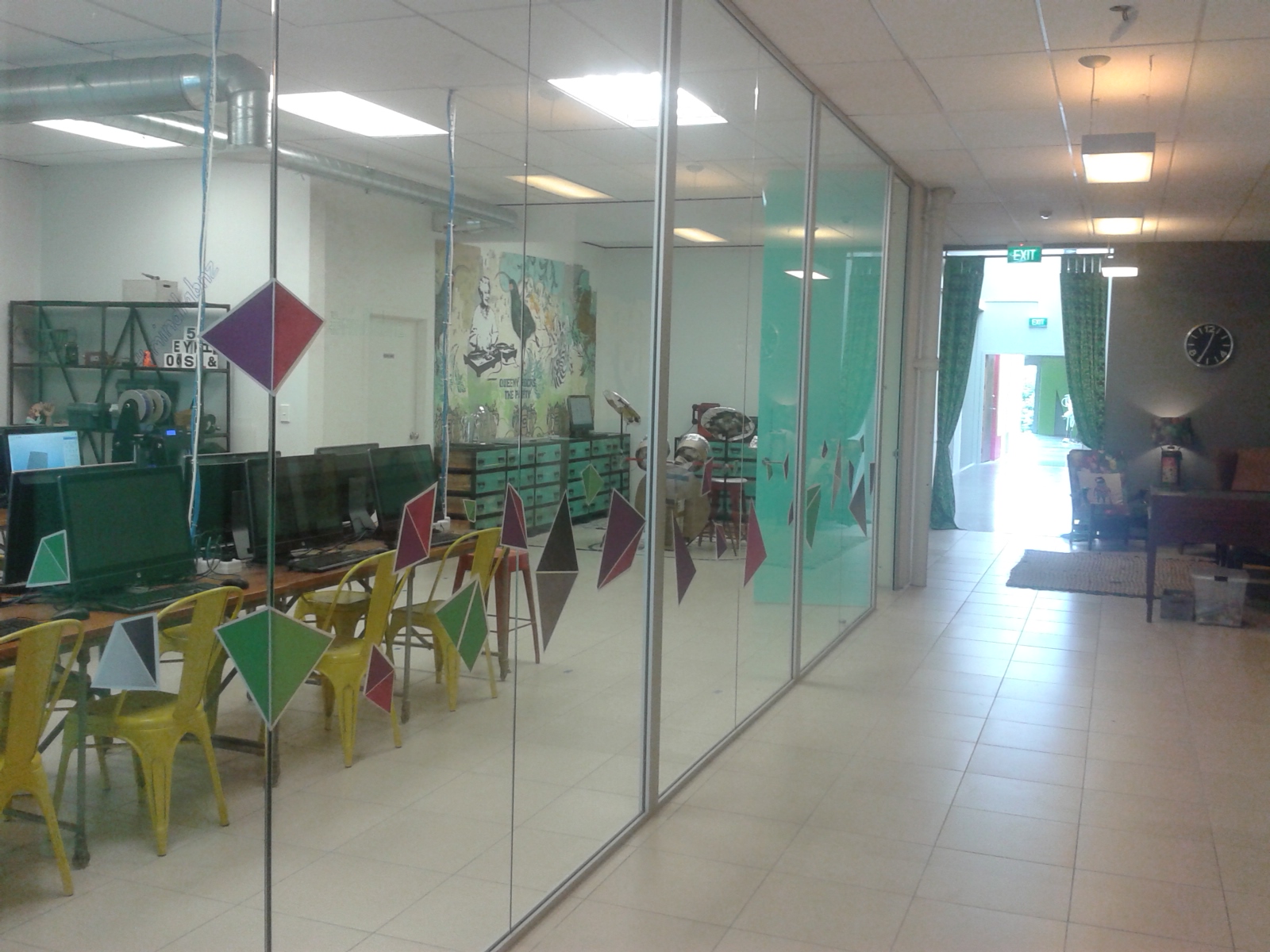
Chris Clay met us and showed us around the amazing space while explaining what each area is used for: film special effects, 3D animation, robotics, coding, science…it was incredible as you can see from the photos below:

What a Science Lab can look like

What a Science Lab can look like

2013-11-01 12.35.43

The Coding Room and Corridor down to Robotics

Continue reading

Enabling Constraints

Snip20131031_3Seeing your Principal send a tweet like this is so incredibly affirming and validating of the work you have been undertaking. Especially when it comes on a day where your team is sharing the outcome of weeks of work putting together the structures for learning to take place in your school.

2013-10-30 08.58.16

The time spent on the vision, values etc. last term was the foundation for the structures coming into place over the past 2 weeks. All our decisions in putting these in place are well grounded in the school vision and values. Then in one day this week we introduced the staff to all the structures supporting the delivery of our curriculum: Continue reading

Future Learning

Networked Camping GroundI have recently finished reading Disciplining and drafting, or 21st century learning? by Rachel Bolstad and Jane Gilbert and found it incredibly timely as we are planning the learning design for our new school.

Some of the brief highlights of this book for me were:

  • “Knowledge is innovation. Its role is to generate new knowledge, to do things.”
  • The importance of developing systems level of understandings and higher order thinking skills
  • A need to shift focus from skills to dispositions

All of this aligns nicely with what we have been working towards so far at Hobsonville Point Secondary School. Continue reading

NZC and Design Thinking Part 2

While last week was about deconstruction and reconstruction of the New Zealand Curriculum, this week has been about gaining clarity in our process. The state of the table over the past 2 weeks in our “Curriculum Hacking Cave” shows this quite nicely.

20130911-151916.jpg
Continue reading

Mapping, Hacking & Designing

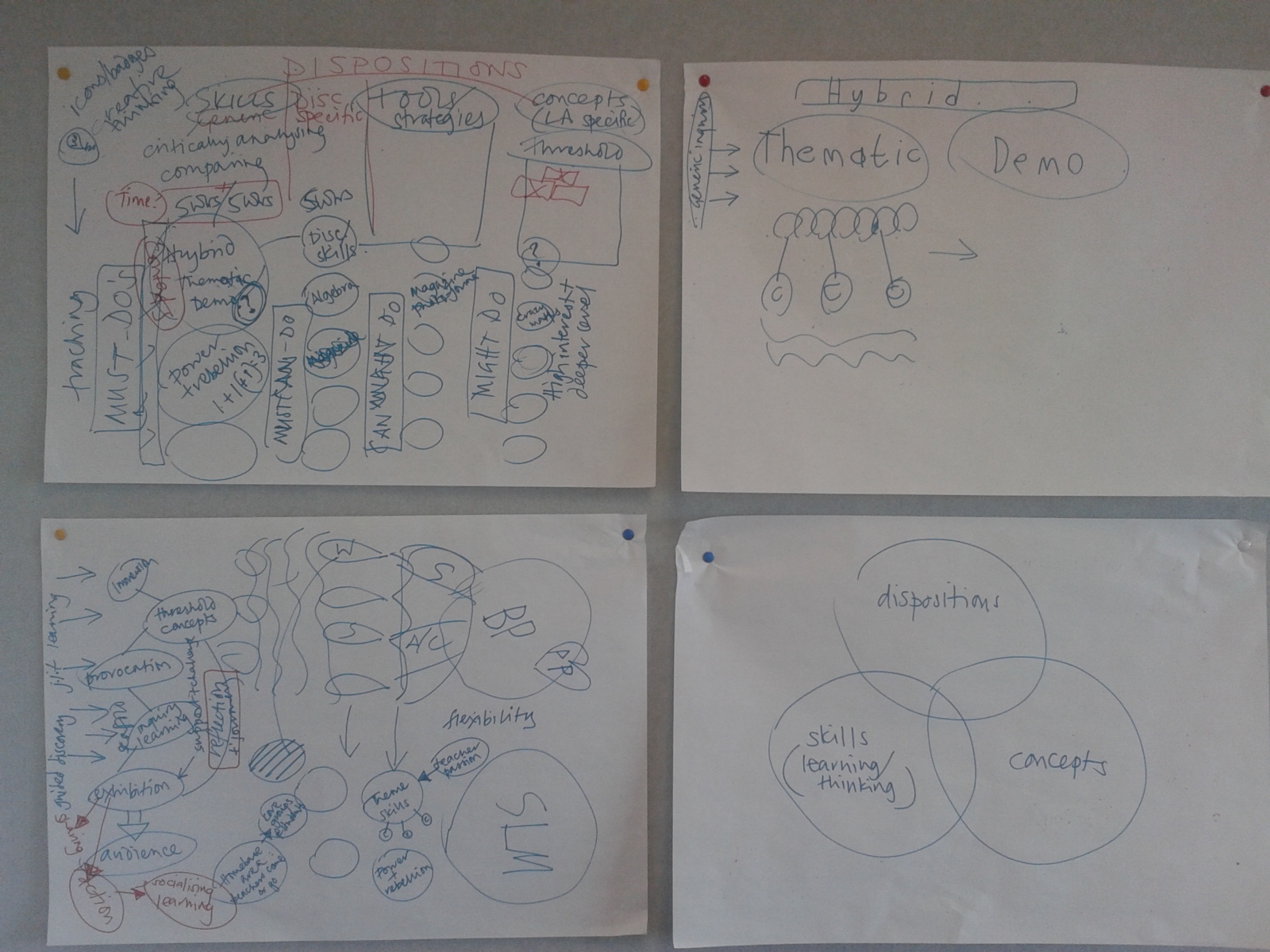
I haven’t posted in the last week due to being deeply involved in mapping the New Zealand Curriculum to enable us to hack it into a better design for learning. This is still an ongoing process so I will blog about it in depth later on but here’s a few photos that may give you an idea of what us Specialised Learning leaders have been up to:

A New Design?

A New Design?

Continue reading

A Principled Leadership Structure

The last few days has been all about leadership. Starting from the whole leadership vs management binary, through educational leadership models and into what the leadership structure here at Hobsonville Point Secondary School will look like.

As a group we set about trying to place characteristics (such as develops a team culture or maintains stability) under the headings of leadership and management. Interestingly, we quickly fell into negative connotations about management while placing positive aspects under the leadership heading. Eventually, however, we realised that there were important aspects that needed to be placed under the management heading. At this stage, our conversations turned reflective as to why we had such negative feelings about management.

We realised that we associate management with bad management or micro-management and forget about good management all together. My personal reflection on why this occurs, is that when management is functioning well it slips into the background, becoming almost invisible and lets the rest of the organisation get on with their functions. Management is critical for a school (or any organisation) to function effectively and leadership simply cannot function without it. Maurie reminded us of the saying “Leadership/vision without management is simply an hallucination.” I think it is really important for us to remember this as we move from our big picture thinking into our work setting up the structures that will allow this vision to flourish. Continue reading