How might we overcome the conference to classroom chasm?

Right now, all around the world, many countries have school holidays. Thousands of teachers are spending part of these holidays attending education conferences. Getting inspired, sharing ideas and planning ways to transform their teaching to benefit the learners in their classes.

Fast forward 3 months and how many of these inspiring ideas have actually been implemented? At ICOT last year in Auckland I was inspired greatly by the ideas of Design Thinking from Ewan McIntosh. Yet, back in my school, very little occurred until I changed schools and had more agency to implement these ideas. I spoke to lots of teachers who enjoyed Ewan’s keynote and workshops but know many of these have not implemented the ideas yet at all.

What happens between being inspired at conferences and getting back to the classroom? Is it a crowd-based euphoria that disappears when we leave the conferences? Are the presenters too inspiring so we feel unable to emulate them? Why are ideas disappearing into a chasm to be lost for a year or 2 until we come across them again at another conference?

Do we need to set up critical friend pairings at conferences to check up on how implentation is going? Do we need a day back together 1 month later to discuss any misgivings we now have? Do we need help with pitching our ideas from conferences to senior leaders or influential colleagues?

How might we overcome the conference to classroom chasm?

This post is Day 8 of my Question Quest
What If school wasn’t compulsory but learning was?

How would schools need to change to stay a part of learning pathways?

What do we lose by not having compulsory curricula?

What do we gain by not having compulsory curricula?

Who else would start becoming a major part of peoples’ learning? Businesses? Churches? Community workers?

Would there be impacts on health and welfare?

How would learning be evidenced?

Why? (for all of the questions above!)

This question storm is Day 6 of my Question Quest.

What if assessment was replaced with evidence of learning?

I am just one of many who believe that the way forward for education is to have assessment that falls naturally out of the learning. This stops assessment being the driver and puts the important thing – the learning – back in focus.

So much of our education system here in NZ – and what I see, read and hear about from overseas – is happening the wrong way around. The importance of assessment in an outcomes based, quality assurance system that effectively pits schools against each other in competition means that we can’t make progress in getting the learning to be the driver.

I propose a shift. Lets stop talking about assessment and just start focusing on evidence of learning. In this fashion, the evidence should naturally fall out of the learning occurring. You may still choose to do this with a formal assessment. But now it’s an opt-in system rather than an opt-out system.

We all know the quality of learning that occurs when it can be focused on authentic tasks and this allows that to occur far more regularly. I wonder how long it will take for NZQA and other qualifications authorities to catch up?

This post was Day 4 of my Questioning Quest

Advice for Twitter Chats

From a small start at the end of 2012, the NZ twitter education chat #edchatnz has grown exponentially. The last chat had around 1000 tweets in the 60 minutes that the chat ran for. It was moving so fast that some very experienced Edchatters were struggling to keep up with what was happening, let alone those new to taking part. There are lots of posts out there offering advice for teachers new to twitter (such as this great one by @lisa_madden) but not much advice on venturing into the often fast moving world of a twitter chat. Hence, this post: How to take part in the awesome learning of a twitter chat when you are new to them.
Continue reading

Authentic Challenges

Another full on week at HPSS where I really focused on continuing to make sure the learning was authentic. This was the next step up as I try to continually improve the learning occurring and much of what happened in the week was due to what had occurred the previous week.

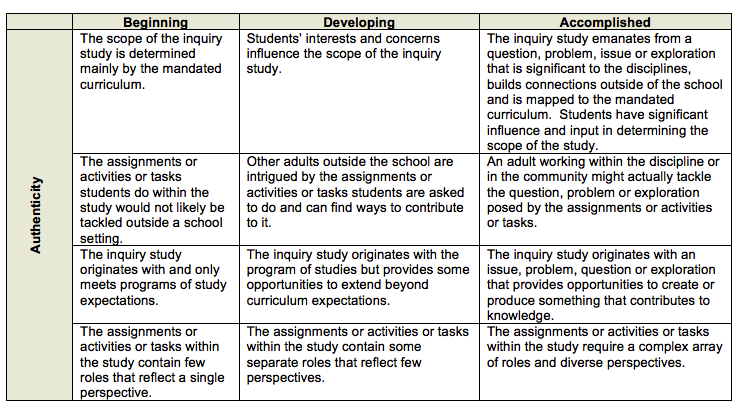
The Galileo Educational Network have an awesome inquiry rubric that I regularly refer to. This image below is of the section on Authenticity that I have looked back on whilst reflecting on the weekend:

Galileo Authentic Inquiry Rubric

Galileo Authentic Inquiry Rubric

Continue reading

Developing the Characteristics of our Heroes

Entering this term I had set myself the goal of improving in my role as a Learning Coach as I felt this was the area of of teaching I was least proud of in Term 1. Our Learning Hubs at Hobsonville Point Secondary School are a version of Learning Advisories as seen at Big Picture Schools and we see our students every day ranging in time from 30 minutes to 2 hours.

In these hubs we are developing students’ Hobsonville Habits (our learning dispositions) their metacognition (which we are using Hermann’s Brain as a focus on this) their hauora (wellbeing) and also being an active advocate for students in their learning. I had done all of these things well in Term 1 but thought that I could make this more powerful for them by personalising our activities to be more meaningful for these specific students.

The activity I describe here took place on Tuesday morning when we spent 2 hours together and is based heavily on an idea from The Falconer by Grant Lichtman (see my full reflection on this book here). Continue reading

Educational Exploring and Seizing the Opportunities

We have an awesome opportunity at Hobsonville Point Secondary School to be part of a team looking to redefine secondary schooling. And I really mean awesome – in all senses of reverence, admiration, fear etc.

It is an opportunity to do something completely out of the ordinary which sounds great but at times can be scary, uncomfortable and unsettling. Now, for me, I see this more on the excitement level of awesomeness but I’m also someone who is scared of heights but absolutely loved the Sky Dive I did a couple of years ago.

As teachers we expect students to be ok with being uncomfortable, learning new things every week and embracing the opportunities that exist. But, at times, we aren’t ok with being constantly in that situation ourselves. This post is essentially about encouraging teachers to embrace those challenges and be ok with being uncomfortable whilst you do so. Continue reading

Pride and Excitement

Wow! Term 1 of HPSS is done. Awesome, Term 2 is close to starting!

This was the thought running through my head as I drove to work this morning. It sums up very succinctly what this reflection is about: how Term 1 has gone and where to next.

To start our last day of Term 1, Maurie asked us to briefly say 1 thing that we are most proud of 1 term in to HPSS. These were the thoughts that ran through my head:

HPSS Modules Iteration 2

We are currently completing the second iteration of our module development and selection process. Personally, I believe that our great Term 1 Modules have been given far more relevance and rigour this time round through the introduction of small refinements to our process.

The concept for Term 2 is Place and Space and each Learning Area, when planning over the 2 year framework, had already designated their threshold concepts and skills for this:

Term 2 Threshold Concepts and Core Skills

Term 2 Threshold Concepts and Core Skills

The module design process this time started with student voice. Representatives from each Hub met to say what they had learned previously about Space and Place and to provide ideas of what students would like to learn about. Their ideas poured out and a 4 page document was then shared with staff to provide a 2nd launching pad to the designated concepts and skills.

Each Learning Area then met together to discuss the possibilities this term when focusing on their specific aims and how the student voice ideas matched. This would allow the focus skills and concepts to be presented in a way that was relevant to our students. Continue reading